




Winter Olympics 2026: Ukrainian Vladyslav Heraskevych files urgent appeal over disqualification for helmet tribute
The IOC disqualified Heraskevych from the Games for refusing to change his helmet honoring fellow athletes who died in the war with Russia.

MILAN — Ukrainian skeleton athlete Vladyslav Heraskevych has filed an appeal with the Court of Arbitration for Sport over his disqualification from the Olympic Games for refusing to change a helmet honoring fellow athletes who died during Russia’s invasion of his home country.
Heraskevych, according to a CAS statement, is arguing that the decision to ban him from the Olympics is “disproportionate, unsupported by any technical or safety violation and causes irreparable sporting harm to him.”
Heraskevych registered the appeal with the CAS’s ad hoc division, which is on site in Milan and can rule on cases in less than 24 hours. The CAS appointed a sole arbitrator to “consider the matter with urgency” but did not provide a timeframe for the decision.
Already, Heraskevych missed the first two runs of the men’s skeleton competition on Thursday after the International Bobsleigh & Skeleton Federation ruled that he could not compete and the International Olympic Committee withdrew his accreditation. The final two men’s skeleton runs are scheduled to take place Friday night in Cortina.
It’s unclear whether Heraskevych could compete at these Olympics even if he were to win his appeal. He requested the right to make provisional supervised runs until the CAS can reach a decision.
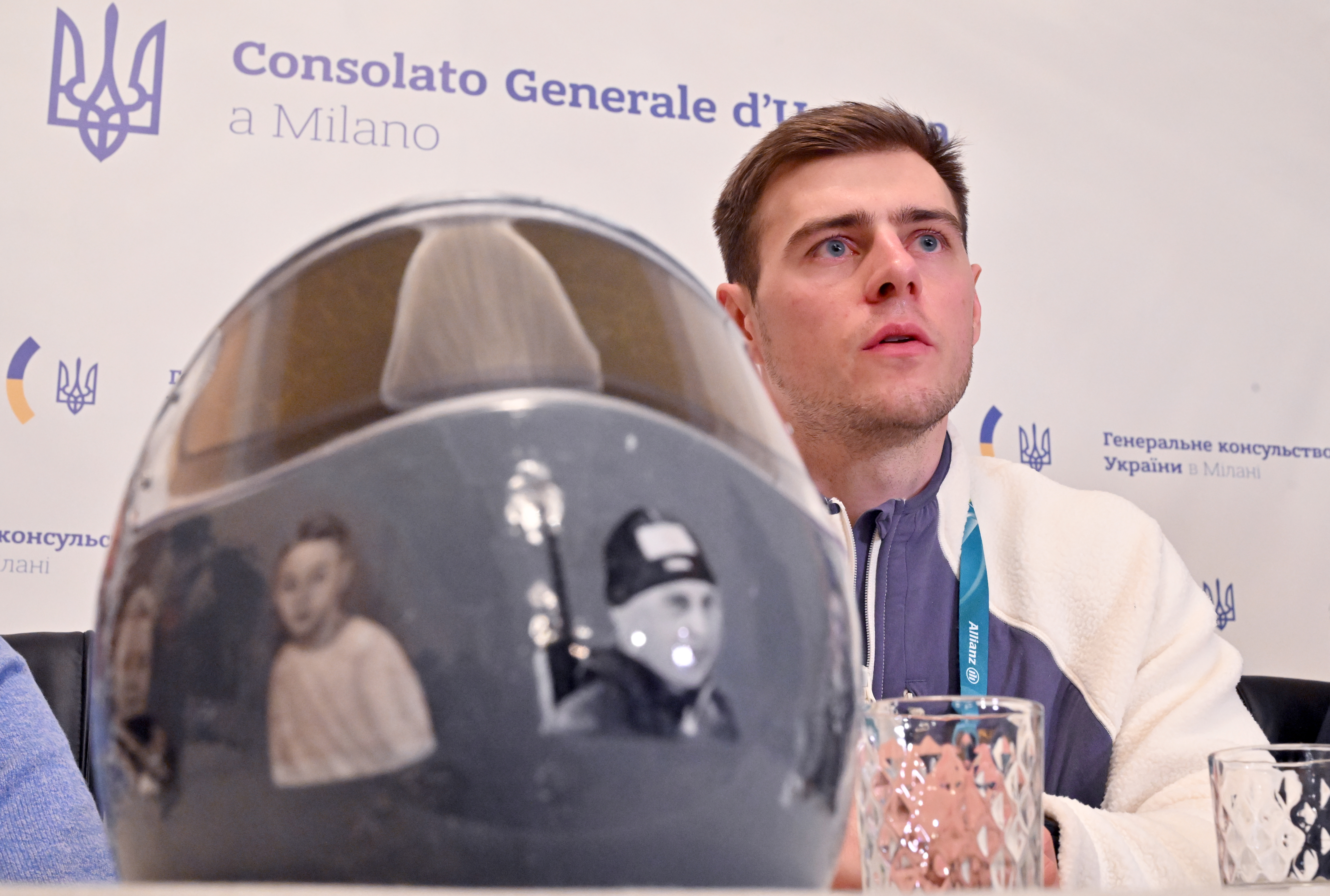
Heraskevych’s helmet displaying the images of more than 20 Ukrainian athletes and coaches first became an issue on Monday when he wore it during a training run. The IOC explained to his coach and Ukrainian officials that the helmet violates rules stating that “no kind of demonstration or political, religious or racial propaganda is permitted in any Olympic sites, venues or other areas."
When Heraskevych made it clear that he intended to wear the helmet anyway, the IOC offered him the option to wear a black armband or black ribbon instead of the helmet. IOC president Kirsty Coventry also traveled to Cortina to sit down in person with Heraskevych on Thursday morning in hopes of brokering a compromise.
“The IOC was very keen for Mr. Heraskevych to compete,” it said Thursday in a statement. “This is why the IOC sat down with him to look for the most respectful way to address his desire to remember his fellow athletes who have lost their lives following Russia’s invasion of Ukraine.”
Coventry reiterated Friday when speaking to reporters that the basis for the disqualification of Heraskevych wasn’t the content of his message. It was the fact that he insisted upon displaying it while he competed.
“I think that in some ways he understood that but was very committed to his beliefs, which I can respect,” Coventry said. “But sadly it doesn’t change the rules. And the rules were that for certain spaces — the field of play, the ceremonies, the Olympic Village — should be spaces where athletes are safe from both sides and where there is no messaging of any kind.”
When he spoke with reporters on Thursday, Heraskevych said he did not consider racing with another helmet because he believes he’s “not violating any rules.” Heraskevych pointed to “big inconsistencies” of athletes from other countries being able to express their political views during press conferences but him not being able to do so while competing.
"U.S. figure skater, Canadian freeskier, Israeli skeleton athlete who is also here today, they didn't face the same things,” Heraskevych said. “So suddenly, just a Ukrainian athlete in this Olympic Games will be disqualified for this helmet.”
Ukrainian President Volodymyr Zelenskyy praised Heraskevych for sacrificing his Olympic dreams to honor his countrymen. In a social media post, Zelenskyy said that 660 Ukrainian athletes and coaches have been killed since the Russian invasion began.
“We are proud of Vladyslav and of what he did,” Zelenskyy said. “Having courage is worth more than any medal.”
What's Your Reaction?