
The Protect College Sports Act And The Fight For Athlete Leverage
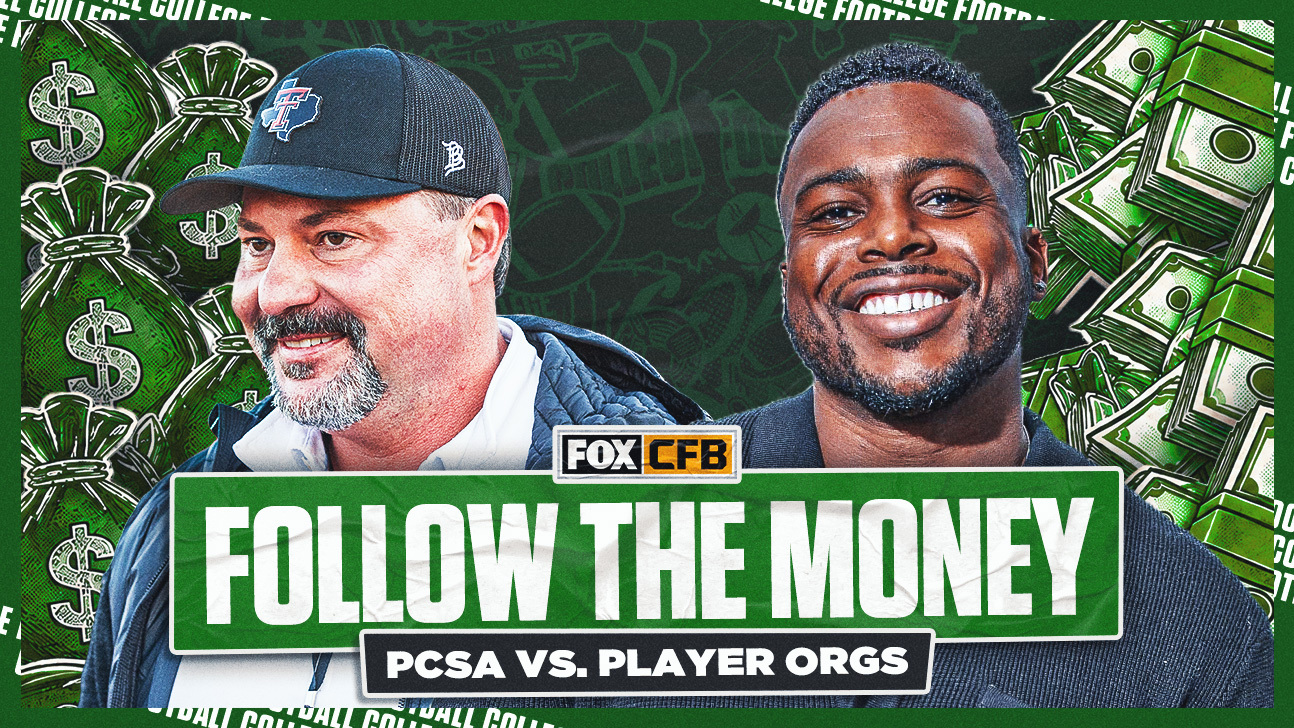
In Follow The Money, Ben Portnoy will bring you into a weekly deep dive into the business of college sports. It's shaping up to be another busy week on Capitol Hill. The Protect College Sports Act is moving toward a final vote. Sen. Maria Cantwell (D-Wash.), who helped author the bill, said on the Senate floor Tuesday that more than 35 amendments have been filed, while both sides work to address outstanding concerns. But for all the positivity around the act, and its future, not everyone is enthused it's on the verge of passage in the Senate. Let's get into it. While the past month has been spent on the positives of the bill in the broader mediascape (see Sen. Ted Cruz’s appearance on "College GameDay" earlier this month), I wanted to talk to a few folks that remain vehemently against the PCSA. The common voices there? Player organizations. "It's taking away bargaining chips that the athletes otherwise have — leverage that the athletes have — to force these schools and conferences to the table and to actually negotiate with them and Congress is jumping in and negotiating on their behalf," Athletes.org executive director Brandon Copeland told me. "College sports are not in shambles. Yes, there may be some programs that are feeling it. There may be some things that are disrupted and really out of the norm. "…. We're watching a market work itself out, and the federal government is already jumping in, trying to save this thing. But when we look at it, the PCSA doesn't actually solve the problems that the authors of the bill say that they are trying to solve." The constant refrain I’ve heard from opponents of the PCSA is that it would legislate changes to the potential income of athletes, among other measures, functionally without their input. That much isn’t totally off base. The PCSA has largely been crafted through lobbying efforts from the Power Four conferences, the NCAA and other big names like Texas Tech booster Cody Campbell. Federal disclosures I examined this week show that between 2020 and 2026, the Power Four conferences spent almost $10.7 million combined lobbying the federal government. The SEC ($4 million) and ACC ($3.5 million) led the group in spending, followed by the Big Ten ($2.1 million) and Big 12 ($1.08 million). The NCAA, meanwhile, spent more than $6.3 million on varying lobbying efforts, per federal disclosures in that span — including paying more than $2 million to the high-powered firm Brownstein Hyatt Farber Schreck. "This is a bill being made without athletes' input, and it reads like that," Jason Stahl, executive director of the College Football Players Association, told me. "It reads like all the restrictions laid out in the bill are almost exclusively put on athletes and not on coaches and administrators. There's no restriction of their movement, no restriction on their salaries, but there are with players." While Stahl and Copeland’s sentiments have been largely unaddressed more broadly, there may well be a fight in the Senate in the coming days to assuage some of their concerns. Semafor’s Burgess Everett reported on Tuesday that Sen. Chris Murphy (D-Conn.), a staunch opponent to the bill, is pushing an amendment allowing athlete collective bargaining — replacing language that was largely neutral about the idea of athlete employment. Collective bargaining has garnered more widespread support across the college sports ecosystem in recent months as leaders like Tennessee athletics director Danny White and Boise State athletics director Jeramiah Dickey have voiced their support. Athletes.org even released its own version of a CBA in December that included varying rules and regulations the industry has sought help with on Capitol Hill. The 35-page draft is a four-year proposal centered on football but also designed to be applicable to other sports. Collective bargaining in college sports, however, faces a multitude of challenges. For one, there is no central players union as exists in professional leagues like the NFL, NBA and MLB, though groups like AO and the CFBPA are attempting to potentially operate as such. Federal law also requires those attempting to collectively bargain be deemed employees, which college athletes are not currently. "They say they're doing this for the athletes and to protect athletes and (the PCSA is) not taking sides, but it is taking sides," Copeland said. "It's blaming athletes and blaming the financial issues in college sports … The protections that you ‘win’ for athletes in the PCSA, in my respectful opinion, are won in the first 45 minutes of a CBA negotiation." Still, that the PCSA has progressed to this point is a monumental moment. The bill is on the verge of passage in the Senate. But as the final touches are being put on the bill before it might be passed off to the House — where it’s likely to face a steep climb — those representing player interests remain skeptical. "I do think that there's less of an impetus to bring the stakeholders to the table if this bill passes," Stahl said. "Particularly if you're giving an antitrust exemption to the NCAA of all entities. It’s going to make it less likely to have that kind of pressure in place to bring them to the table." The energy drink brand Celsius is getting deeper into the college sports game. The company announced a deal spread across seven schools — Air Force, Colorado, Louisville, Oregon, Texas, Vanderbilt and Washington — that will see it activate on campus during game days this fall. I know I spend more time on college campuses than most these days, but energy drinks are everywhere. Not shocked to see one of the trendier brands in the space expanding their footprint in the college sports space. OK, it wasn’t technically a quote, but the LSU-Ole Miss celebrations brought out some of the funniest corners of the internet over the last few days. Shout out to Ole Miss Chief of Staff William Kneip for this one that really made me laugh:
What's Your Reaction?
 Like
0
Like
0
 Dislike
0
Dislike
0
 Love
0
Love
0
 Funny
0
Funny
0
 Wow
0
Wow
0
 Sad
0
Sad
0
 Angry
0
Angry
0




Comments (0)