
Trump says Huang is not a national security risk. Why are others so concerned?
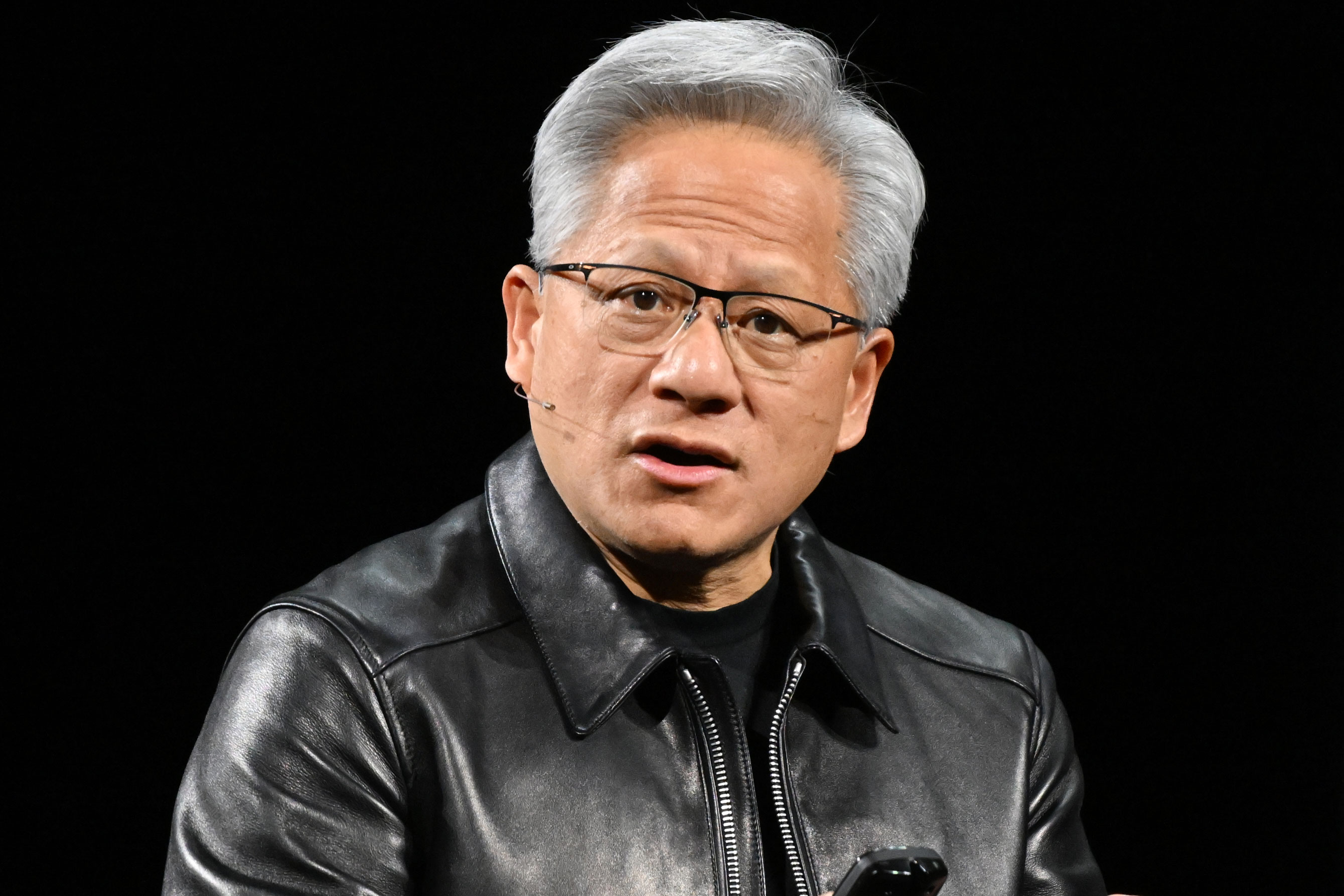
When news broke Monday that Nvidia had reinstated Jensen Huang as its president and CEO less than two weeks after he resigned amid reports of multiple extramarital affairs — including one with a woman suspected of spying for China — President Trump was quick to reassure the public that "the United States Government has no reason to believe that Jensen's return to NVIDIA poses any risk to National Security."
“People say, 'Is it a threat to have him?’ No, it’s a threat to lose him,” Trump told CNBC shortly after the announcement.
But not everyone agrees. Before Huang resigned, the Trump administration's own intelligence officials reportedly identified Alice Huang — the Chinese-born leader of a Southeast Asian company called Megaspeed — as a Chinese intelligence asset who kept in touch with Beijing's top spy agency for more than a year while she targeted the Nvidia chief.
Why does this matter? Without government authorization, U.S. export controls prohibit Nvidia from selling certain advanced AI microchips — the chips that have powered the artificial intelligence boom — directly to China, America's main AI competitor. But during a period when Jensen and Alice Huang were seen dining and socializing together, Megaspeed wound up buying billions of dollars' worth of those same Nvidia chips.
And Megaspeed not only has ties to Beijing. It's actually under federal investigation for potentially smuggling advanced Nvidia semiconductors out of the U.S. and into China.
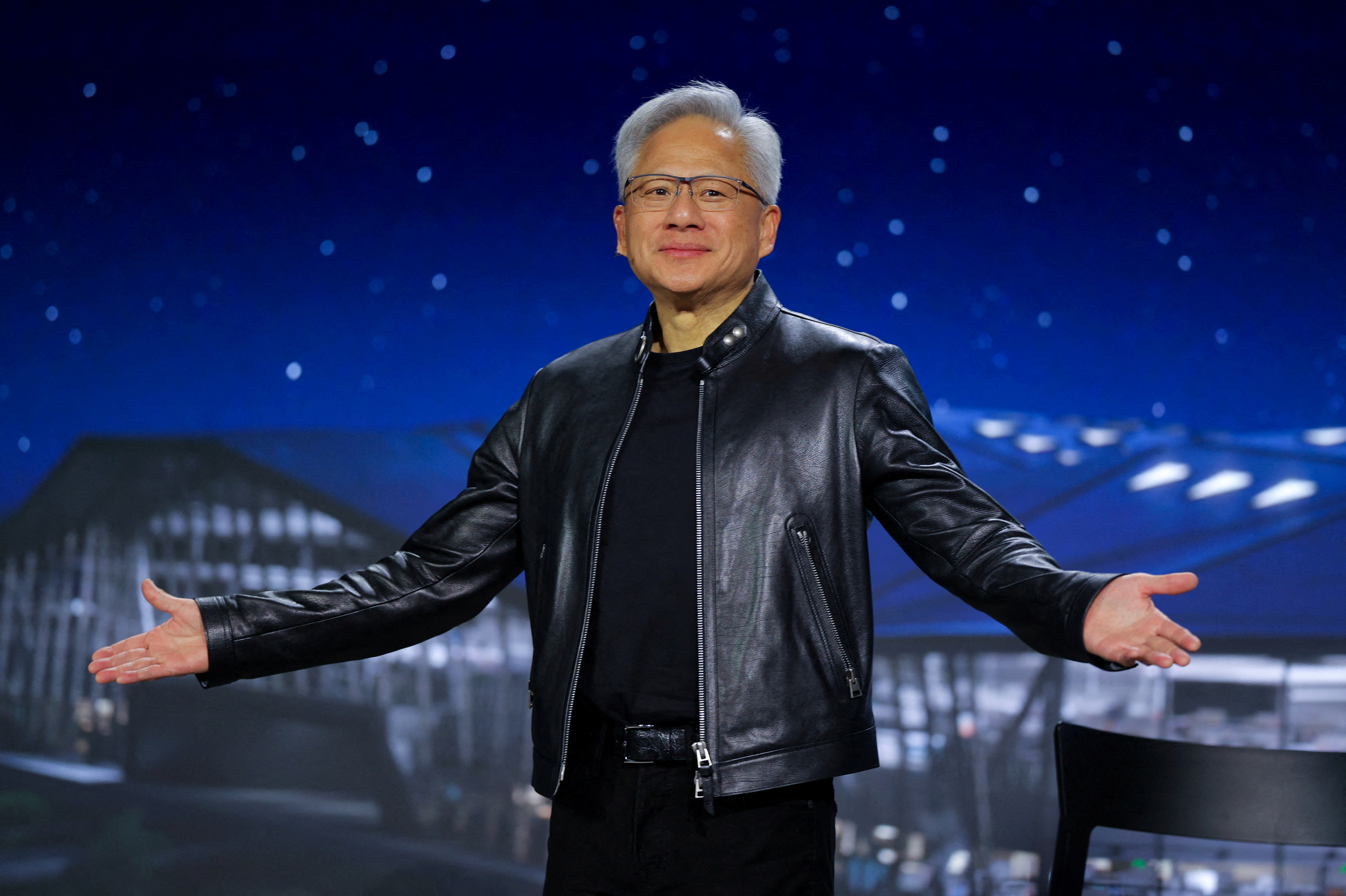
As a result, Huang's reinstatement triggered immediate bipartisan backlash. Outgoing Republican Rep. Don Bacon of Nebraska accused Huang of being "compromised and exploited by a Chinese spy" and said "Nvidia should have moved on" without him.
"Congress needs to get to the bottom of who approved high end computer chips sales to China," Bacon wrote on social media. "We cannot say we want to win the AI race and then give China our best technology. We need sunlight on who is responsible."
Jensen Huang was compromised and exploited by a Chinese spy. Nvidia should have moved on without Huang and ignored the Administration’s inexplicable desire to save Huang. Congress needs to get to the bottom of who approved high end computer chips sales to China. We cannot say we…
— Rep. Don Bacon 🇺🇸✈️🏍️⭐️🎖️ (@RepDonBacon) November 23, 2026
Sen. John Cornyn — another retiring Republican lawmaker — questioned Trump's seemingly cavalier attitude toward Huang and China.
"No national security risk?" Cornyn posted. "Based on what?"
On Monday, Trump took credit for Huang's return, saying he had spoken directly to Nvidia's board. “I convinced them,” the president told CNBC. “I made the deal.”
The U.S. position on chip sales to China has seesawed over the last 18 months. In April 2025, the Trump administration imposed its first major restrictions on AI semiconductor sales outside the U.S., toughening rules created by the Biden administration. But after several meetings between Trump and Huang — who consistently lobbied for letting chip companies do business with China — the administration eventually approved sales of Nvidia's second-most-powerful chip to Beijing.
At the same time, "advisers to Trump told him on at least two occasions that U.S. intelligence had uncovered Ms. Huang's links to the Chinese spy agency and that she was in a close relationship with Mr. Huang while he was still running Nvidia," according to the New York Times.
But Trump "downplayed the concerns" and refused to intervene because he "regarded Mr. Huang as a valuable ally and Nvidia as essential to the health of the American economy and stock market," U.S. officials with direct knowledge of the briefings told the paper. Meanwhile,
After Jensen stepped down, Trump went on to muse about his return and question whether Alice Huang was a Chinese intelligence asset, denying that anyone in his government had ever told him that.
"I don't know that she is a spy," the president told reporters last week. "Usually, what happens with that is that any woman coming to the country that's a beautiful woman that comes from China, they say she's a spy."
On Sunday, Trump called for Huang's return on social media. The New York Times reported that it came after "several days of maneuvering to provide the company's board with assurances that Mr. Huang was not facing criminal charges and did not pose a national security risk." That maneuvering reportedly included directing Vice President JD Vance, who has close ties to Silicon Valley, to speak with both Huang and Nvidia's board.
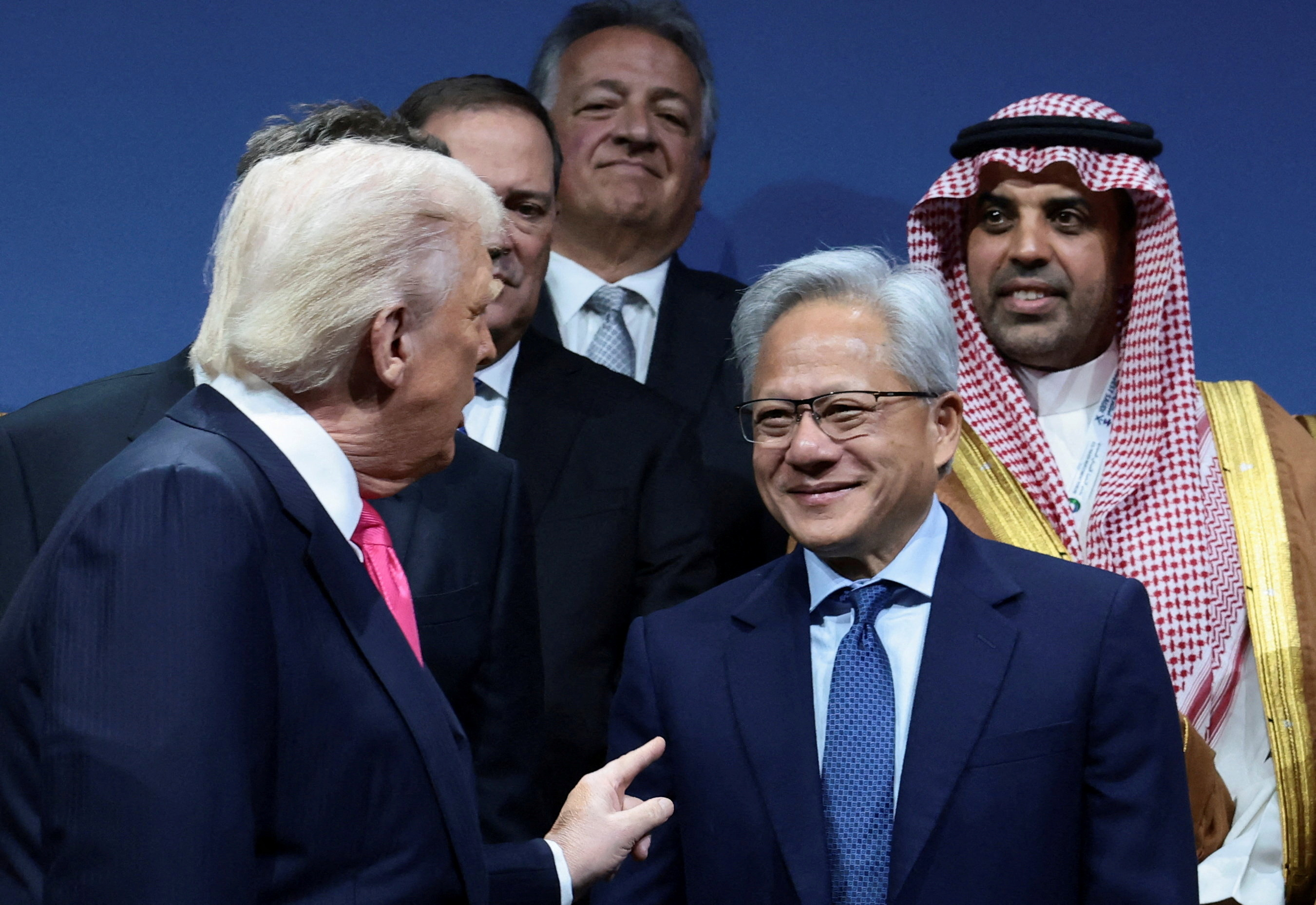
On Monday, the board announced that it had voted unanimously to reinstate Huang. Trump responded by calling Huang "a Great Patriot and National Treasure" and insisting that "the U.S. Government does not possess evidence that he has engaged in any unlawful conduct."
In the same post, Trump added that "NVIDIA should continue its thorough internal investigation of the Company's compliance with U.S. export controls in order to ensure that it is fulfilling its legal obligations and Patriotic Duty to protect U.S. National Security."
But an internal probe is unlikely to satisfy Congress. Huang is already set to deliver closed-door testimony on Dec. 1 before three congressional committees led by Republicans — and Democrats have signaled that they will keep investigating the issue when they take control of the House and Senate next year.
On Monday, Democratic Sen. Ruben Gallego of Arizona accused Trump of "selling out our national security to keep the stock market high." Another Democrat, Illinois Gov. JB Pritzker, said on social media that "this is the greed and lack of accountability that the country just rejected."
"There are serious national security concerns being raised about Jensen Huang that should not be papered over by this administration or the Nvidia board," Pritzker added.
The president is a significant investor in Nvidia stock. Last week, the Washington Post reported that by August 2026, Trump held a $13 million to $62 million stake in Nvidia — up from as little as $615,000 at the end of 2024.
Treasury Secretary Scott Bessent has also accused the commerce department, led by Howard Lutnick, of stalling efforts by the treasury, defense and state departments, as well as the U.S. trade representative, to block chip sales to Megaspeed.
"Commerce has the pen," Bessent said on CNBC earlier this month. "You will have to ask them about their internal processes."
Lutnick's former firm Cantor Fitzgerald — now led by his sons — has business relationships with Southeast Asian data centers, leading lawmakers on both sides of the aisle to question "whether Lutnick compromised national security to make money for his family," according to the Guardian.
Lutnick should have taken “the threats of communist China more seriously,” Republican Sen. Tom Cotton of Arkansas told the Wall Street Journal last week. Congressional Democrats have said they plan to investigate Lutnick in 2027.
This article originally appeared on Yahoo News at https://www.yahoo.com/news/politics/article/trump-says-jensen-huangs-nvidia-return-is-not-a-national-security-risk-why-are-others-concerned-172651151.htmlWhat's Your Reaction?
 Like
0
 Dislike
0
 Love
0
 Funny
0
 Wow
0
 Sad
0
 Angry
0




Comments (0)