
Pros And Cons Of Pep Guardiola: The Coach USA Fans Want, But One They Need?
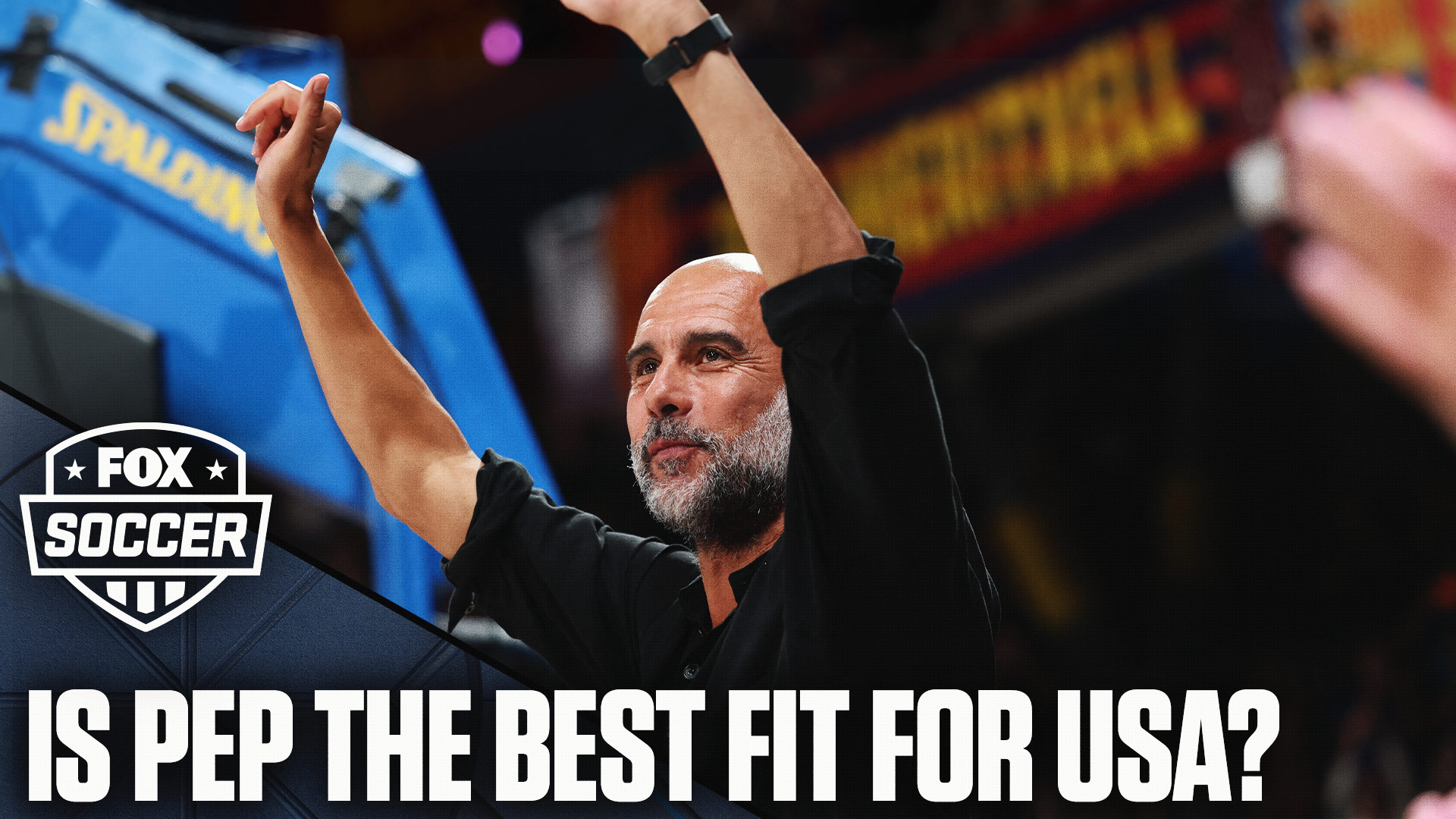
A new era has arrived for the United States men’s national team as Mauricio Pochettino’s exit now opens the door for a new head coach who can come in and help this side reach even higher destinations. With Pochettino, there was promise, there was joy, pain and heartache — specifically from this past summer after the Round of 16 loss to Belgium — and even a tear or two was shed as the Argentinian left the U.S. with a project that has plenty of promise, albeit without guidance once again. It is a ship at sea, searching for the lighthouse to guide it to a new promised land. From an economical perspective, paying off Pochettino’s release clause (a reported figure of approximately $10 million) means that there is room to be ambitious and the reported interest of Pep Guardiola creates a level of excitement that is clearly felt across the fanbase. Guardiola stepped down from Man City last season after a decade that included 20 major trophies such as six Premier League titles, the club's first Champions League trophy and a treble. And his stints with Barcelona and Bayern Munich speak of someone who has an iconic catalogue of international pedigree. There is also, however, obvious apprehension. Despite his incredible résumé, Guardiola may not be exactly what the USMNT needs. Indeed, the job might not even be something that interests the Catalan as he continues to enjoy his sabbatical. But let’s forget that for a moment and instead allow ourselves to imagine what the USMNT would look like under the legendary manager. We all know that Guardiola loves New York City, would be enticed by the infrastructure and, of course, the luring attraction of a nation that continues to embrace the beautiful game. So this is more about the team itself and what Pep would be able to bring – or not – to the table. Why Pep Could Work You have heard this statement from yours truly before but I think Guardiola, alongside Sir Alex Ferguson, are the two greatest managers in football history. With Guardiola, my argument is that he sees a player’s positional versatility and potential like no other manager. In the second Clásico between Barcelona and Real Madrid of the 2009-10 season, he turned Lionel Messi into a false No. 9, thus creating mayhem inside and outside of Real Madrid’s box because he wasn’t confined to a wing. That allowed Thierry Henry and Samuel Eto’o to come from wide areas and Andrés Iniesta to push up from midfield. The result? A 6-2 demolition. Then there’s his implementation of creating the hybrid full-back. In 2013 with Bayern Munich, he formed the great Philipp Lahm into an inverted full-back as he encouraged a mix between defending and entering the midfield. He did the same at Manchester City with João Cancelo, who is now at Barcelona. The possibilities for Guardiola to further diversify the characteristics of this USMNT squad could be highly intriguing. Imagine what he could do with the wonderful defender Alex Freeman, who is thriving at Villarreal and whom I think could be one of the best at his position in the future? I think it’s important to remember that Guardiola’s managerial career began with Barcelona B. His priority, amongst other things, was to develop and build on the qualities of the young players at his disposal. This quality as a head coach never left him and once he took over the first team from Frank Rijkard in 2008, he continued to improve young talent. He had a keen ability to implement a tactical system that made players better and provided a culture where they could thrive. It wasn’t just about Messi—although throughout Guardiola’s time with Barça, Messi delivered his best ever numbers. Pep Guardiola was more one-on-one with Barcelona players, creating an environment of personal growth and belief. Fourteen players from La Masia graduated for the first time in the Guardiola era — including Sergio Busquets, Thiago Alcântara and Sergi Roberto — and this has remained a synonymous stamp of Guardiola's philosophy. At Bayern Munich, Pep gave Joshua Kimmich his Bundesliga debut and developed a very strong mentorship. At age 31, Kimmich is still world class and will be known as one of the best ever midfielders the country has ever produced. At Manchester City, the list is endless. From winger Phil Foden to defender Nico O’Reilly (an England mainstay for years to come), Guardiola gave debuts to 41 academy players. If Guardiola was to sign with the USMNT, there is a project here that screams for an evolution of youth, one that Pochettino prided himself on developing. But Pep, ever the sensei of football, could do wonders with the likes of young forwards like 17-year-old Cavan Sullivan and 18-year-old Julian Hall. Guardiola’s obsession with possession is never as strong as his love for recovery of possession. The USMNT’s high-pressing philosophy with Pochettino was strong, but it was limited because the steam runs out. With Guardiola, it would be elevated. Guardiola’s press is far more intricate as it works on a complete cohesive understanding. I think this young American team could benefit greatly from it, especially in crunch time during the World Cup. In addition, there aren’t many managers who can dissect an opponent better than Pep. From his video reviews to scouting, there is a real-time relaying of information to his players. It's constant — before, during and after the match. As a result, the USMNT would feel more prepared than ever before. At a time when there are more USMNT players in Europe than ever before, Guardiola’s chess-playing football would raise their IQ. Why Pep May Not Work To begin with, let’s talk about the most obvious negative. Guardiola has never managed an international team and, what’s more, the United States’ gig is so unique. It requires any manager to fully embrace and understand the many layers of American soccer – both as a domestic entity (MLS, USL, college soccer, and beyond) and as a cultural and footballing industry of talent in North America. This is not easy and I think Pochettino actually did an excellent job at learning how to approach the best attributes of someone like midfielder Sebastian Berhalter (played in MLS for most of his career until his move to Middlesbrough) to striker Folarin Balogun (has never known anything other than Europe) so Pep will have to implement his philosophies, which are very demanding, with a complex cultural landscape. In addition, will there be a sense of frustration with certain levels of development in the U.S. for Pep? The pay-to-play system? Or it could be something Pochettino was vocal about: the U.S. soccer system has no promotion/relegation and often "rewards the loser." These are all very realistic issues that might frustrate a manager who comes from the school of Barcelona, where the grassroots of football are the key to everything. Guardiola is an obsessive manager, and I mean this in the best and worst of ways. His freakish attention to detail and demanding personality might just be too much for the U.S. Soccer Federation, who will have to play catch-up with every single facet of his day-to-day requirements. So even though the international break is during certain periods of the year, don’t for one second think Guardiola will not be demanding everything and anything from the federation. This might seem like a negative, but it’s also an opportunity to be better. So it all depends on how managing Guardiola’s expectations and what can actually be achieved becomes a balancing act. I come back to this point from a different angle. Aside from Barcelona B, Pep Guardiola has always taken over giants of the European game. At Barcelona, he took on a team that had been trophyless for two seasons but still had Blaugrana as a major contender in La Liga with a 20-year-old Messi ready to take over the world. At Bayern Munich, he entered in 2013, shortly after Jupp Heynckes led the Bavarians to a historic treble that included the Champions League. When Guardiola replaced Manuel Pellegrini in 2016 at Manchester City, the team had already won its first ever Premier League title and were spending left and right on signing players. This is not taking anything away from Guardiola, far from it. He made good teams into iconic ones. But the USMNT is a totally different animal because its ultimate quest is to conquer European or South American giants on a regular basis and finally reach a semifinal at a World Cup, something that has never been done in the modern era. CONCACAF is not UEFA. Pure and simple. Will his lack of international experience, therefore, prove to be too much of a conundrum? Because with all due respect to the Gold Cup or Nations League, the ultimate challenge is to be a dominant side at the World Cup.
What's Your Reaction?
 Like
0
 Dislike
0
 Love
0
 Funny
0
 Wow
0
 Sad
0
 Angry
0





Comments (0)