
Sam Altman: ‘The world should accept some bad things happening’ for benefits of AI
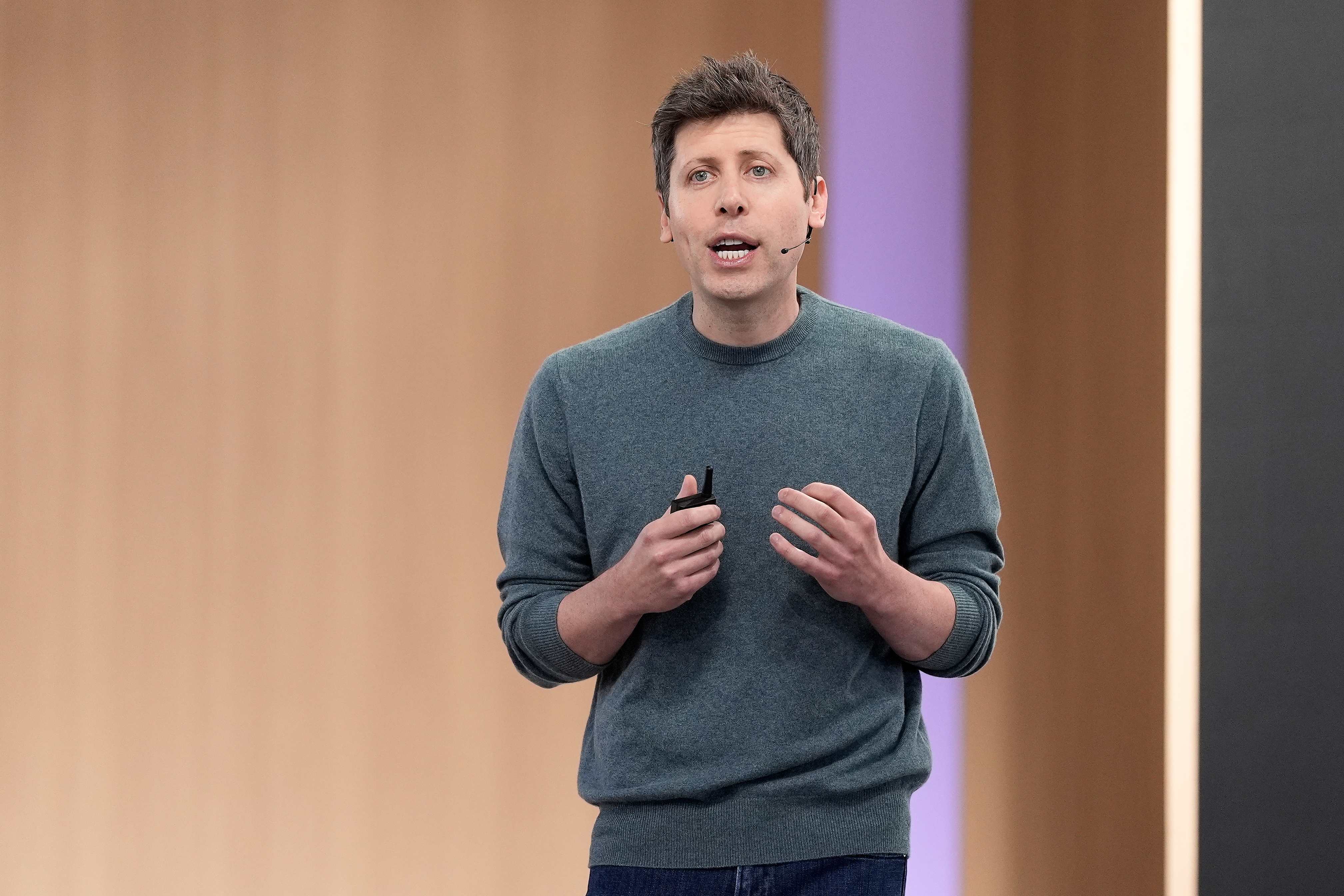
OpenAI CEO Sam Altman admits "something's clearly not working" with the artificial intelligence money that has flooded the midterm elections — and he doesn't expect President Donald Trump's rebrand of the technology to improve his industry's image with the American public, either.
"I get why AI has a really negative perception right now," Altman told Brendan Bordelon in an exclusive interview marking the launch of Decoded by POLITICO. "I don't think spending money on politics is what's going to make people feel better about it. The industry needs to figure out a way to address what the actual concerns are, and right now, a lot of people in the industry are being quite tone deaf."
In the wide-ranging conversation, Altman offered a window into how OpenAI is confronting new political pressures and intensified competition with Anthropic, its corporate archrival run by former employee Dario Amodei.
Altman says OpenAI is more tolerant than Anthropic of less-than-catastrophic harms from AI, drawing out what he sees as a fundamental split in worldview between the two leading labs even as they converge on tougher rules in the wake of high-profile autonomous hacking incidents.
"We believe that the world should accept some bad things happening for the benefits of this technology and people having the agency," said Altman, who characterized those harms as linked to "the lighter touch regulatory stance that we advocate for."
"I wouldn't take a trade of saying like, 'We'll make sure there's no major hacks, there's no kind of like misuse of this technology, there's zero scams, there's zero all the other bad things that will happen,'" said Altman. "Because I think people will do tremendously orders of magnitude more good stuff."
The OpenAI head also suggested there needs to be a new "liability framework" for companies whose models are capable of autonomous cyberattacks, like the Hugging Face hack over the summer and incidents involving government websites. Altman called that behavior "clearly unacceptable," and said that "if something goes wrong with our models during training, there's going to be some version of that we need to be responsible for."
"This is the kind of thing that we are hoping our policymakers will all debate," he added, as Congress remains deadlocked.
And while Altman defended a "morally binding" AI safety accord that Trump signed with tech CEOs last week as a great start for the industry, he predicted calls for guardrails will continue and said he would "welcome something more." He also said he shares the concerns of those who worry AI rules are being crafted by the White House and tech executives without input from Congress or the public.
"If we do too much to restrict this technology in the name of safety, and we end up with a small number of companies or people — or perhaps one country — that have too much power over this, that also is a way that this can go horribly wrong," Altman said.
Trump paired last week's AI agreement with an executive order renaming artificial intelligence to "super intelligence." It's a term Altman considers more accurate, though he doubts the public will find it "less scary." He expects people to keep using "AI" — and unlike Elon Musk, he won't be renaming OpenAI to OpenSI. "Brands are sticky," Altman said.
Throughout the interview, Altman sought to explain his company's new policy posture. He recently agreed with Amodei on the need to slow down AI's development, and his lobbyists have increasingly followed Anthropic in backing new safety requirements at all levels of government.
But despite emphasizing "a lot of daylight" between OpenAI and Anthropic, Altman also tried to distance himself — on both policy and politics — from the Silicon Valley investors who are spending heavily to block strict regulations, including through the pro-AI super PAC network Leading the Future.
"When it comes to the potential of a serious loss of control to AI … this is where I would say to the accelerationists, let's be a little thoughtful about lurching into this future," he said, using a descriptor often applied to the tech leaders and advisers who have Trump's ear on AI.
OpenAI President Greg Brockman has pulled away from those donors as well, reportedly backing out of a second $25 million donation to LTF and apologizing to employees internally for creating a "distraction." (Altman said he hadn't seen The New York Times report when asked if he agreed that the money was counterproductive, and that LTF never approached him for money.)
From the AI race with China to his favorite world leader and why the ChatGPT maker hasn't made all of its hacks public, Altman went deeper with Decoded than we've heard him go before.
Read the full Decoded newsletter for more.
Also check out the full interview on YouTube and listen to the podcast here.
This article originally appeared on Politico at https://www.yahoo.com/news/politics/articles/clearly-not-working-sam-altman-105600057.htmlWhat's Your Reaction?
 Like
0
Like
0
 Dislike
0
Dislike
0
 Love
0
Love
0
 Funny
0
Funny
0
 Wow
0
Wow
0
 Sad
0
Sad
0
 Angry
0
Angry
0


Comments (0)